Key takeaways
- A brand has two sides: the sign that lets people recognize an offering, such as a name and logo, and the image people have of it in their minds.
- In trademark law, a brand is a sign that can be protected. In Germany, you can register it with the German Patent and Trade Mark Office (DPMA).
- Branding means the work on a brand: building it, making it visible, and maintaining it. The logo is only one part of it.
- Building a brand can be broken down into six steps, from your starting point through positioning and brand core to visual identity and rules.
- What it costs depends mainly on the scope: how much is already in place, how many applications you need, and who maintains the brand afterward.
What is a brand?
A brand is a sign that sets an offering apart from others, and at the same time the image people associate with it. The sign is something you can design and protect: a name, a logo, a color. The image forms in the minds of the people who deal with you, from everything they experience with you.
That is why building a brand means working on both sides. The sign makes sure people recognize you. The image decides what they then think of you.
Brands in trademark law: the protected sign
Under the German Trade Mark Act, any sign can be protected as a trademark if it is capable of distinguishing the goods or services of one company from those of others (Section 3 MarkenG). This includes words and names, images, letters, numbers, sounds, three-dimensional shapes, colors, and color combinations.
Protection can arise in three ways (Section 4 MarkenG): through registration in the DPMA’s register, through use if the sign has gained recognition as a trademark among the relevant trade circles, or through being a well-known mark. In a dispute, you first have to prove that recognition or reputation. A registered trademark, on the other hand, is on record in the register.
Filing an application with the DPMA costs €290 online for up to three classes of goods and services, or €300 on paper. Each additional class costs €100. Protection lasts ten years from the filing date and can then be renewed for another ten years at a time, starting at €750 (DPMA trade mark fees, as of November 2026).
The DPMAregister gives you a first overview of whether identical or similar trademarks already exist. This guide is not legal advice. For a thorough search and questions about your application, talk to a lawyer who specializes in intellectual property.
Brands in marketing: the image in people’s minds
In marketing, the term is broader. The American Marketing Association describes a brand as any distinguishing feature, such as a name, term, design, or symbol, by which goods or services can be recognized. A teaching text from the Open University also distinguishes between the identifying mark and the overall impression people form from all their experiences with an offering: from using it, from advertising and design, and from what the media report about it.
You cannot dictate this overall impression, but you can shape it: through what you promise, how you present yourself, and whether you keep your promise. That is exactly what branding is about.

What is branding?
Branding means the work on a brand: building it, making it visible, and maintaining it. So branding is more than design. It starts with the question of what you stand for, and its goal is for people to experience exactly that every time they encounter you: on your website, in your proposals, in conversation, on your letterhead.
The word comes from the verb “to brand”: to mark something with a hot iron to show who owns it, who made it, or what quality it has. A brand is also a printed mark made for the same purpose, in other words a trademark (Merriam-Webster).
What is part of branding?
- Strategy: positioning, target audience, brand core, brand personality, and tone of voice. This is where you define what the brand stands for and how it speaks.
- Name and sign: brand name, logo, and, where it fits, a tagline.
- Visual identity: colors, typefaces, imagery, and design elements, together known as the corporate design.
- Applications: every place where people encounter the brand, from your website and presentations to print materials, signage, and workwear.
- Rules and maintenance: brand guidelines that set out what applies, and clear ownership to make sure it does.
So a logo is part of branding, but it is not branding. If you only order a new logo, you end up with a new sign, but not yet with a clearer brand.
Branding, corporate identity, and corporate design
The three terms are closely related, but they mean different things. Corporate identity is a company’s self-image: who it is, what it stands for, and how it wants to present itself. Corporate design is its visible part, meaning logo, colors, typefaces, and imagery. Branding is the work that develops both and brings them into everyday use. What makes up a corporate identity is explained in our article on corporate identity.
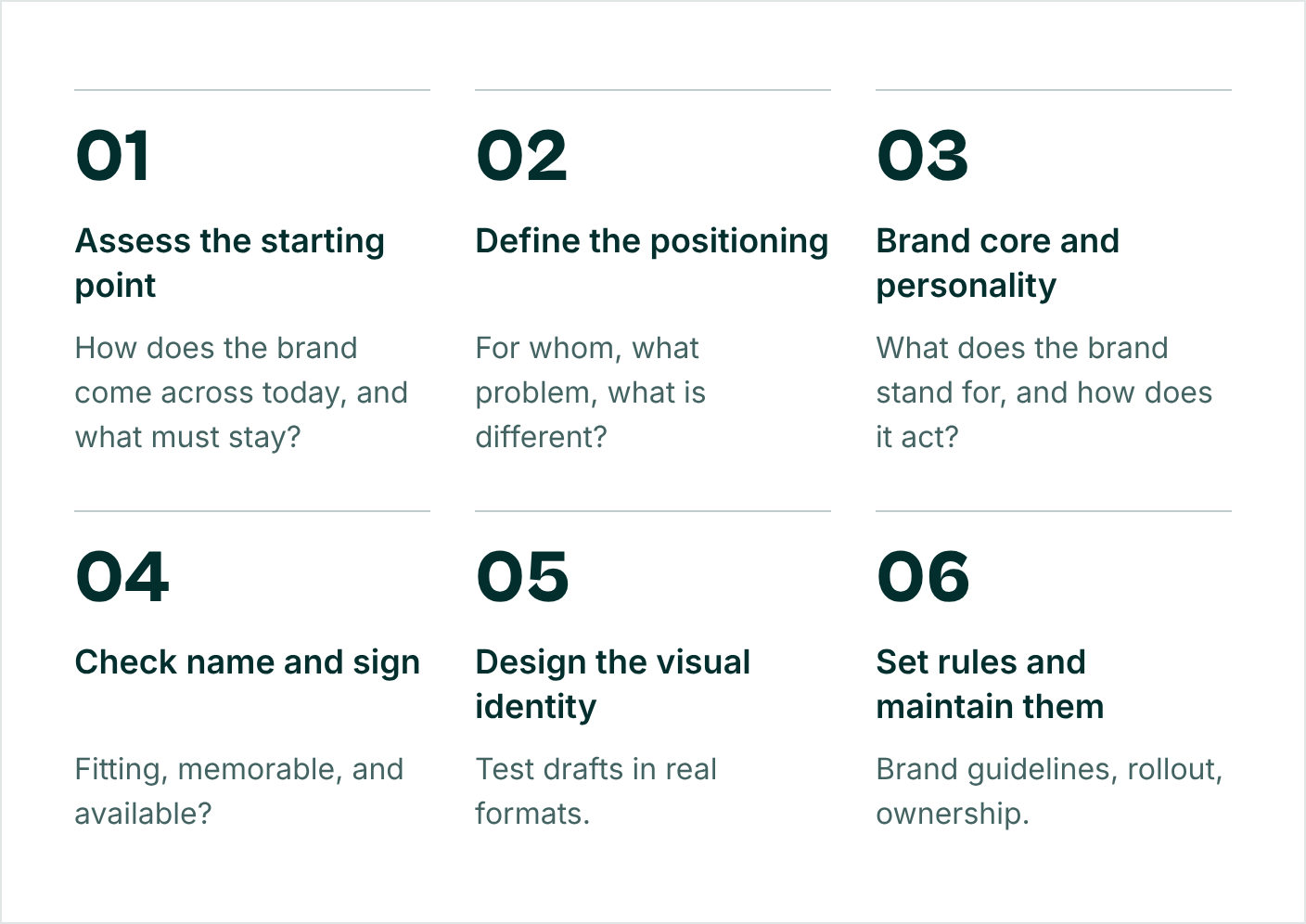
Building a brand in six steps
Whether it is a new business, a new product brand, or the rebrand of a brand that has become blurred over the years: building a brand can be broken down into six steps. Depending on your starting point, they take more or less time. The examples come from two of our projects: the rebrand of KlinikRente, a pension scheme for people working in healthcare, and the development of CLARA, a new brand for aesthetic dentistry in Dortmund.
1. Assess your starting point
Start with an honest assessment: How does your brand come across today, and what should change? Gather everything that already exists, from the website to the business card. Ask customers, employees, and partners how they see you. And write down what has to stay because people recognize you by it. For a new brand, look at the market and the competition instead: Who is already there, and where is there room for you?
For KlinikRente, the brief in 2016 stated that the brand came across as cool and distant, used only blue, and had no consistent visual identity. It was to become fresher, younger, and more emotional without losing trust and reliability.
2. Define your positioning
Positioning answers three questions: Who are you there for? What problem do you solve? And what do you do differently from others? It is the basis for every decision that follows, including design.
CLARA brings together aesthetic dental treatments such as teeth cleaning, bleaching, and aligners. Who it is for: people who care about their appearance, from young, trend-conscious adults to best agers. The problem: preventive care such as professional teeth cleaning is seen as a medical service, and prices are not transparent and vary widely. The difference: lifestyle before treatment, results before technical terms, uniform prices, and financing in monthly installments. The values behind it: affordable, transparent, aesthetic.
3. Determine your brand core and personality
The brand core sums up in a few words what the brand stands for. The brand personality describes how it behaves, as if it were a person. Both help you later with every decision, from a photo to a sentence on your website.
For KlinikRente, the core is security and stability, because several insurers share the risk. The personality: sincere, competent, robust, and inspiring. The tone: at eye level and emotional rather than in insurance jargon.
4. Check your name and sign
A name has to fit your positioning, be easy to remember, and be available, as a trademark and ideally as a domain. So check the DPMAregister early for identical or similar trademarks, before you put time into design. If you are keeping an established name, clarify instead what makes your existing sign recognizable.
The name CLARA comes from the Latin “clarus”: bright, clear, radiant. The first sketches picked up on that radiance, and spellings with K and with C were tested too. In the end, two elements remained: a smile drawn as a single line and an asterisk. The smile stands for the brand promise, not for dentistry. In the logo, the asterisk sits to the left of the wordmark, and it also works on its own, for example on workwear.
5. Design your visual identity and test it in real formats
Now the logo, colors, typefaces, imagery, and design elements take shape. Don’t judge drafts on screen alone, but where the brand will have to work later: on a poster, the website, a flyer. Real formats show whether a draft holds up.
For KlinikRente, we placed the same poster design on a billboard with six logo variants: lowercase or with a capital K and R, each plain, underlined, or with a round symbol. This made it possible to compare how much of a fresh start the brand could take. The decision was evolution: the mixed-case spelling and the underline stayed, because they make KlinikRente recognizable. The colors, typeface, key visual, and imagery are new.
6. Set the rules, roll them out, and maintain them
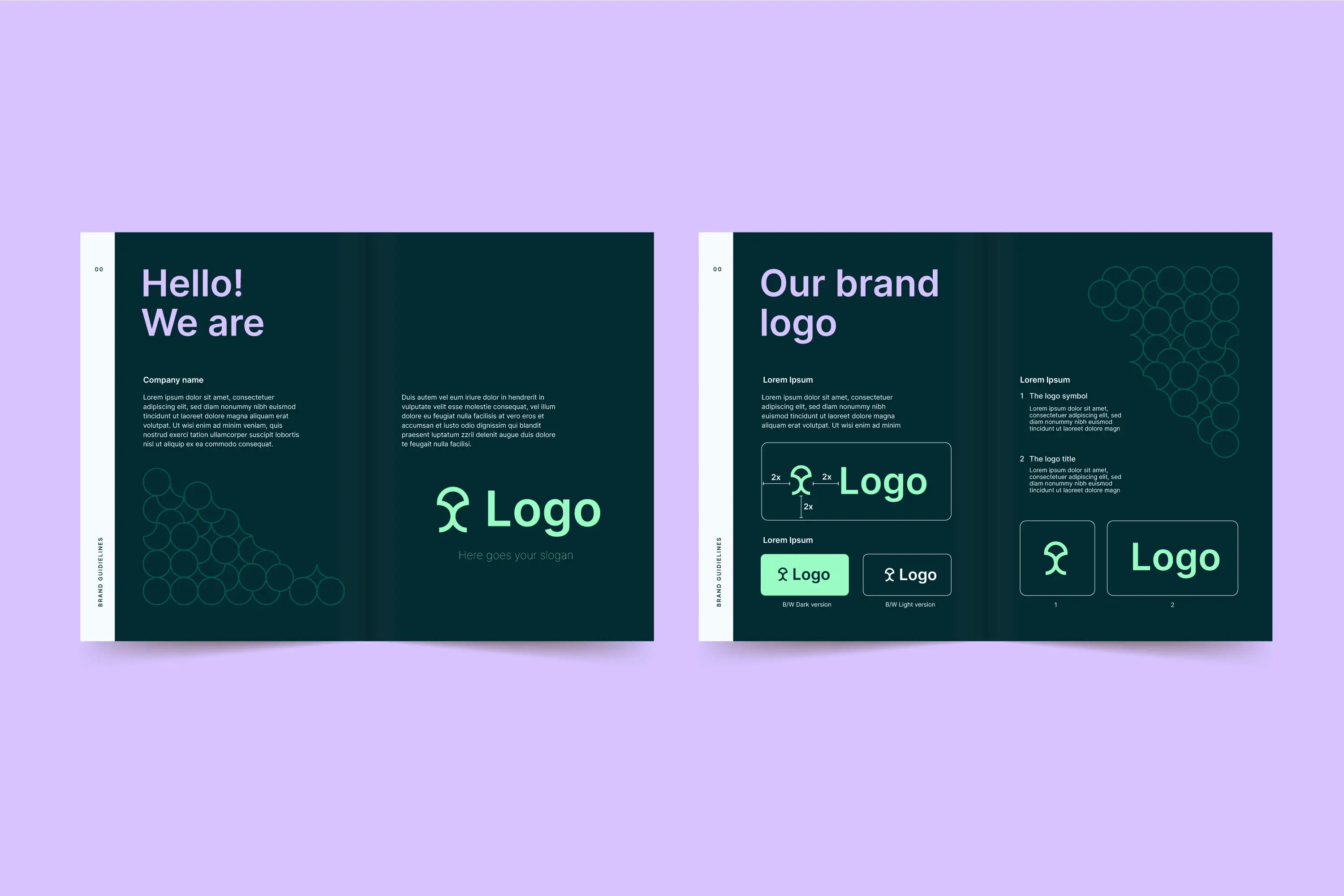
A brand only stays consistent if everyone knows what applies. Record the rules in brand guidelines, with examples and files to download. Roll them out wherever the brand is created: in your team and with agencies and service providers. And decide who answers questions and approves changes. Our article Creating brand guidelines shows what belongs in good brand rules.
For KlinikRente, everything is in an online style guide: logo, colors, typeface, imagery, key visual, design system, and pictograms, each with downloads. By summer 2017, letterhead, business cards, flyers, a presentation folder, posters, and a roll-up had followed. The logo, KR Blau (KR blue), the blob (an organic shape that serves as the key visual), and the tagline “Mach’s für dich.” (do it for yourself) still shape the brand today, almost ten years later.
What does it cost to build a brand?
That depends mainly on the scope. A brand for a new business is a different project from reorganizing a brand with many products and locations. These questions determine most of the effort:
- How much is already in place? Is there a clear positioning, or does the strategy have to be developed first?
- Do you need a new name, or will you keep the existing one?
- How many applications do you need: a logo and the basics, or also a website, print materials, signage, and workwear?
- How many people are involved in decisions?
- Who will maintain the brand afterward: your team or a service provider?
On top of that come fixed costs such as the DPMA application, from €290 online. Not every project needs the full scope. For the research project Ankunftsquartiere stärken (strengthening arrival neighborhoods), the focus was on the visual presence, not on in-depth brand work. We call this minimum viable branding: a simple visual identity that conveys the core messages, is recognizable, and stands out from other projects. That is why a reliable price always starts with a look at your starting point.
Build your brand yourself or with an agency?
You can tackle a lot yourself, especially the starting point and the positioning: nobody knows your company as well as you do. The outside view and the design are harder. From the inside, it is often hard to see how a company comes across to others. And a visual identity that lasts for years takes design craft.
An agency is worth it above all when you are building a brand from scratch or renewing it fundamentally, when many people have a say, or when the brand needs to last. When choosing one, look for three things: The work starts with strategy, not with the logo. Drafts are shown in real formats. And at the end, there are rules your team can work with on its own. Our Branding page shows how we work as a branding agency, with process, timeline, and prices.
Frequently asked questions
Is a brand the same as a trademark?
Not quite. A trademark is the legally protected sign, such as a registered name or logo. A brand is more: it also includes the image people have of a company or product. You can register a trademark, but you can only shape the image.
What does branding mean in simple terms?
Branding is the work on a brand: building it, making it visible, and maintaining it. That covers strategy, name and logo, visual identity, every place where people encounter the brand, and the rules that keep it all consistent.
What is the difference between a brand and a logo?
A logo is a sign; a brand is more. A brand also includes its name, colors, language, and above all the image people have of you. A new logo changes how people recognize you, but not automatically what they think of you.
Do we have to register our brand as a trademark?
In Germany, there is no obligation. Trademark protection can also arise through use, if the sign has gained recognition as a trademark among the relevant trade circles (Section 4 MarkenG). In a dispute, however, you first have to prove this. A registered trademark is on record in the DPMA’s register, which makes it easier to defend yourself against imitators. For a binding assessment, ask a lawyer who specializes in intellectual property.
Can a company have several brands?
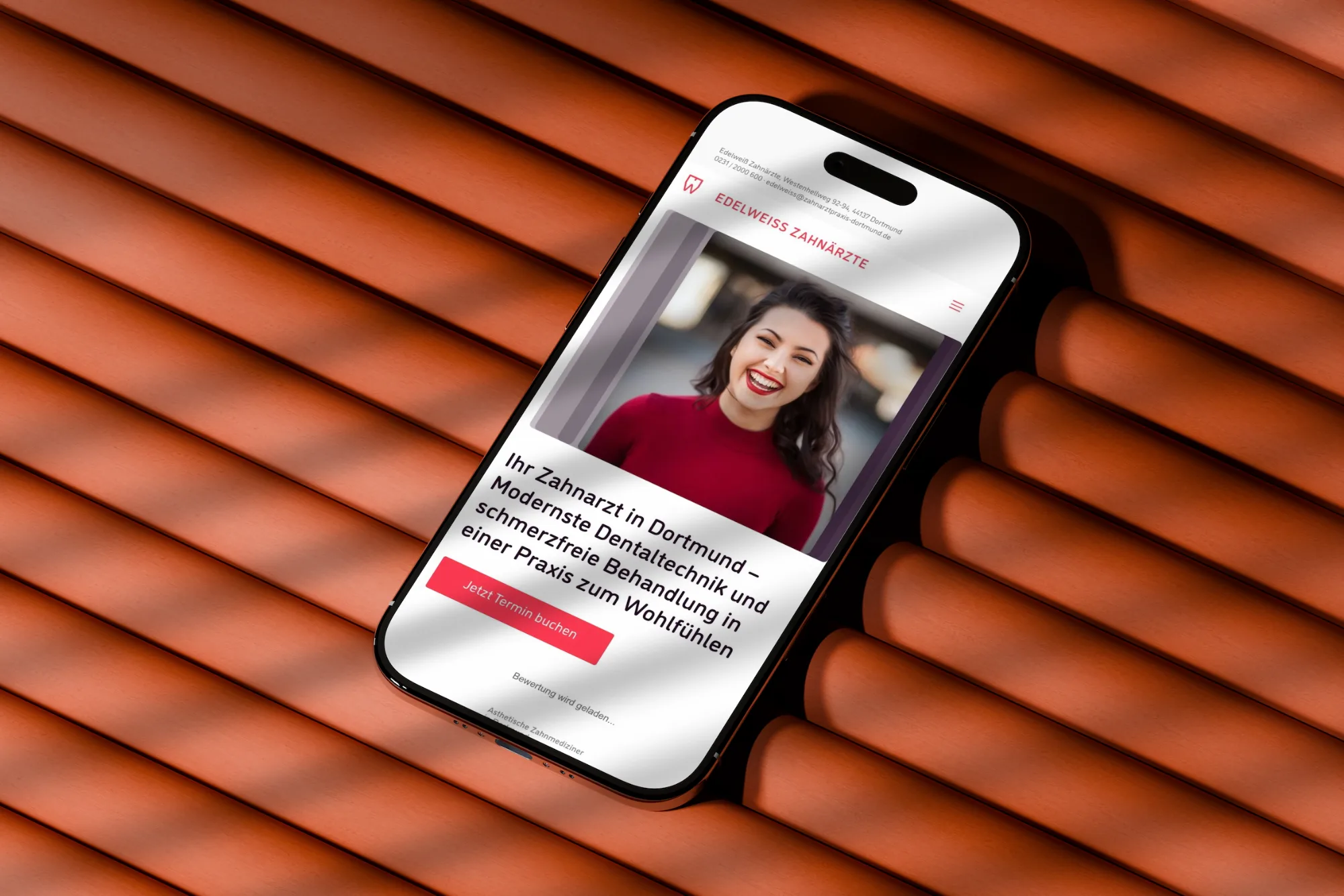
Yes. Many companies have an umbrella brand with product or service brands underneath. How these brands relate to each other is defined by the brand architecture: whether they all appear under one name, whether each stands on its own, or whether it is a mix. One example: Edelweiß GmbH from Dortmund runs the aesthetic dentistry brand CLARA alongside its practice brand Edelweiß Zahnärzte. We developed both.
How long does it take to build a brand?
That depends on the scope and your starting point: how much strategy is needed, whether you need a new name, how many applications are created, and how quickly decisions are made. A brand is never really finished anyway; it grows with every appearance and needs care. How long it will take in your case is something we clarify in the intro call, once we know your starting point.
Your next step
Want to build or sharpen your brand? Book an intro call: 30 minutes, free of charge. If you’d like to test us first, start with a starter project for a fixed €500. If you then book the Brand Sprint, the fixed price is credited toward it.
Want to know where your brand stands first? The AI brand check covers strategy, identity, application, and operations in 15 questions, free of charge and without signing up. You get your result in about five minutes, scored by fixed rules.